tulah · Wellness operations platform · 2025 · 4 min read
14+ roles, one care journey: an operations platform for tulah
Designing the operational system behind personalised wellness — from pre-arrival onboarding to post-retreat home care.
In 60 seconds
- Problem
- Personalised wellness looks simple to guests. Delivering it takes consultants, diagnostics, therapies, schedules and operations working as one.
- What I did
- Led the end-to-end product experience, bringing guests, specialists and operations teams into one care system.
- Result
- Spreadsheets, paper forms and manual coordination replaced by connected care workflows
- My role
- Product Lead, Pansophic Technologies (founding team)
Context
Delivering care wasn't the challenge. Coordinating it was.
Without a connected system, care teams worked in silos, recommendations fragmented, activities were hard to coordinate, guests didn't know what came next and continuity of care after the stay was hard to keep.
Most of these weren't workflow problems — they were clarity problems. Guests needed to know what happens next and where to go; staff needed clear ownership, dependencies and next actions; consultants needed one way to combine their expertise into a single plan.
The opportunity wasn't another wellness app. It was one operational system connecting specialists, operations teams and guests through a single end-to-end care journey.
My role
What I owned
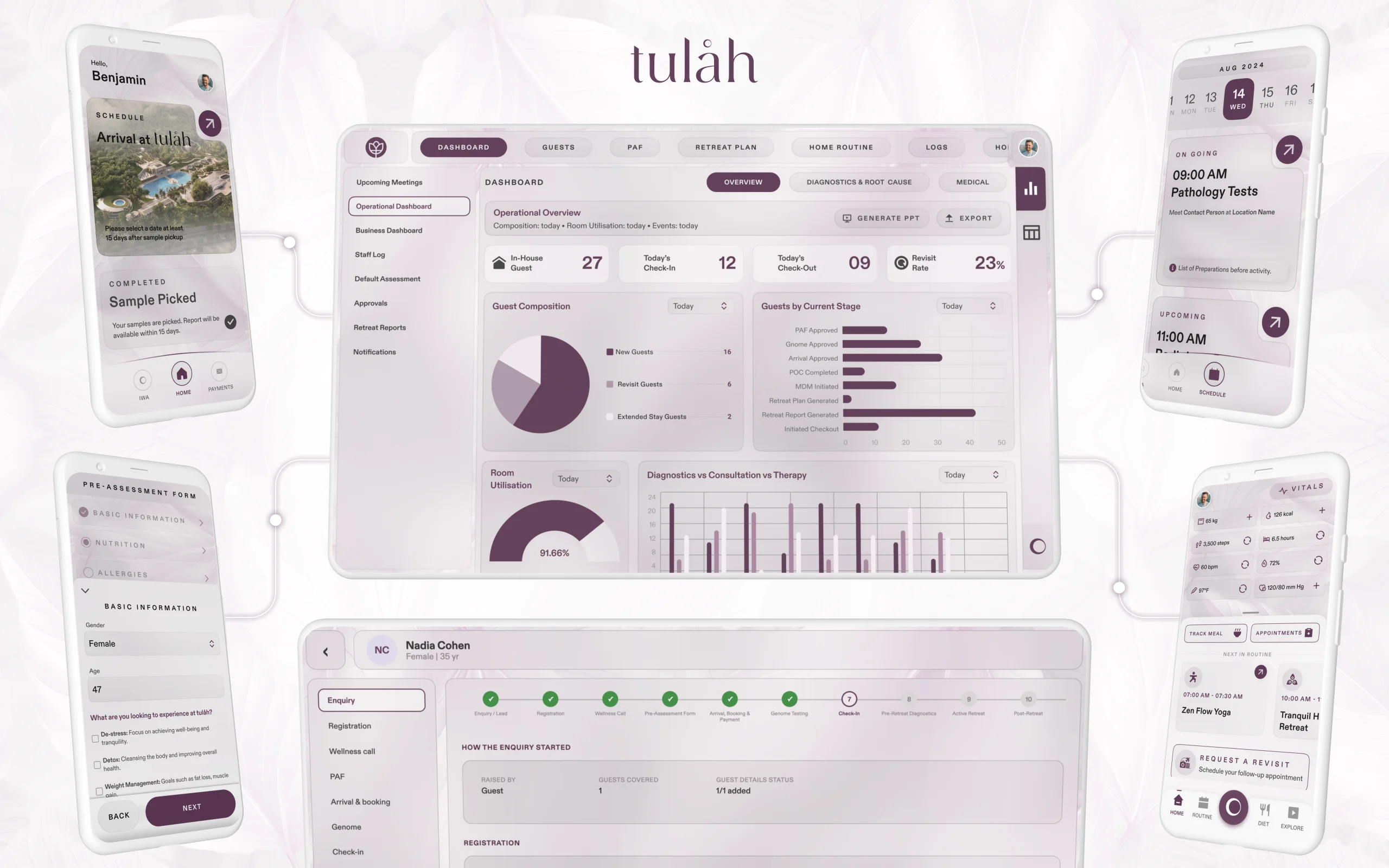
I led the end-to-end product experience across the whole wellness journey, unifying guests, specialists and operations teams into one coordinated care ecosystem.
- Product strategy
- Information architecture
- Operational workflow design
- Role-based systems
- Care planning framework
- Mobile experience
- Design system
- Interaction design
Worked with: Cross-functional product and clinical operations
- 14+operational roles with their own workflow
- 6+wellness disciplines in one planMedical, Ayurveda, Nutrition, Fitness, Yoga, Diagnostics
Key decisions
Four decisions that made care coordinated
Design around roles, not modules
- Observation
- Every operational role had different goals, responsibilities and context.
- Decision
- Dedicated workbenches for each team's workflow instead of one generic admin interface.
Hide operational complexity from guests
- Observation
- Guests needed clarity through their journey — not visibility into operational processes.
- Decision
- Surface only what's relevant at each stage; keep scheduling and coordination inside staff workspaces.
Standardise multidisciplinary care
- Observation
- Each specialist worked differently, so recommendations were hard to combine into one retreat plan.
- Decision
- A shared care-planning framework so Medical, Ayurveda, Nutrition, Fitness, Yoga and Diagnostics contribute through one structure.
Design beyond the retreat
- Observation
- Wellness outcomes depend on habits after guests leave, not just during their stay.
- Decision
- A home-care platform for routines, consultations, nutrition, activity tracking and follow-ups.
How it flows
One care journey, end to end
- 01Pre-arrival intake
- 02Specialist consultations
- 03Shared care plan
- 04Retreat operations
- 05Home care & follow-ups
The shared care plan is the hinge: every discipline contributes to it, and it drives the operational tasks — meals, therapies, sessions, diagnostics — that guests and staff see.
Result
What changed
- 14+operational rolesCRM, planning, coordination, consultation, operations and guest experiences
- 6+wellness disciplinesCombined into one personalised retreat plan
- 500+care activitiesSessions, therapies, medications, meals, diagnostics, notifications, follow-ups
- End-to-endworkflow automationReplaced spreadsheets, paper forms and manual coordination
What I learned
The hardest part of designing complex systems isn't creating workflows. It's creating shared understanding.
Every challenge came back to clarity — for guests, for specialists and for operations. Designing wellness wasn't about better interfaces; it was about helping dozens of specialists operate as one coordinated care system.