Allyra.ai · Execution visibility · Calibrated autonomy · 2026 · 3 min read
~50% fewer approval interruptions (est.): AI that shows its work and asks only when it matters
Enterprise teams won't hand work to AI they can't see or stop. I made every agent run visible across five stages, and moved human approval to the moments that actually carry consequence.
In 60 seconds
- Problem
- Enterprise teams won't hand work to AI they can't see or stop.
- What I did
- Designed how Allyra's agents show their work and when they ask: the five-stage run view and approval only at consequential steps.
- Result
- 5 visible execution stages on every task · ~50% fewer approval interruptions (est.)
- My role
- Product Lead, Pansophic Technologies
Context
Black-box processing breeds distrust and makes intervention impossible.
People need to know what the AI is doing, where it is and when their attention is needed. A generic “Thinking…” leaves them unable to tell progress from a stall or a hallucination.
Asking people to rubber-stamp dozens of routine operations trains them to approve blindly — including the anomalies that matter.
My role
What I owned
Designed how Allyra's agents show their work and when they ask: the five-stage run view and approval only at consequential steps.
- Human–AI interaction design
- Enterprise workflow design
- Product strategy & definition
Key decisions
2 decisions that shaped it
AI shouldn't work behind a curtain
- Observation
- Black-box processing breeds distrust and makes intervention impossible. People need to know what the AI is doing, where it is and when their attention is needed. A generic “Thinking…” leaves them unable to tell progress from a stall or a hallucination.
- Decision
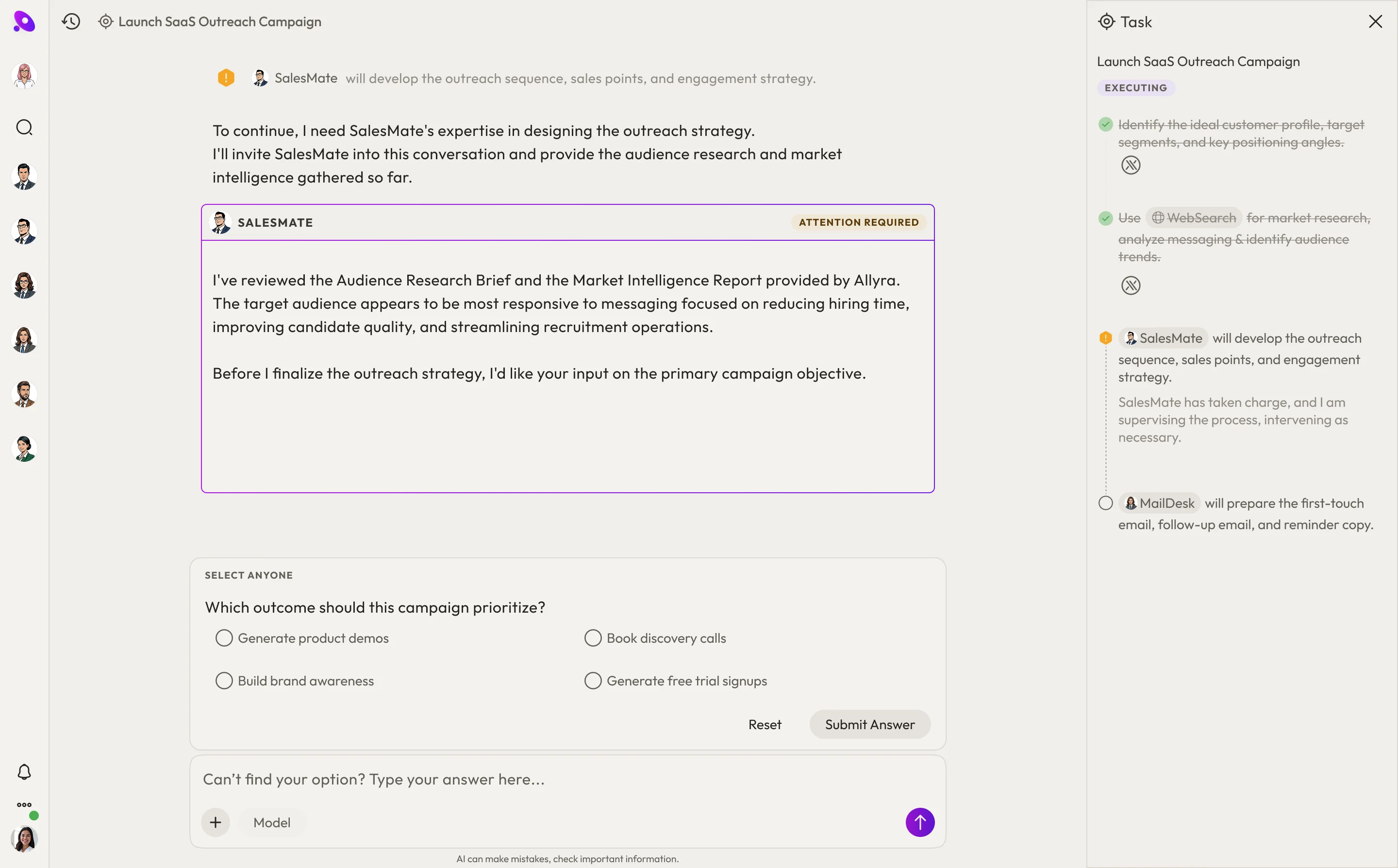
- Show progress across five clearly auditable stages. Live sub-agent status, source attribution and estimated duration surface across five standard lifecycle stages.
- Result
- 5 visible stages for every task
Autonomy without losing control
- Observation
- Constant confirmations cause approval fatigue; zero oversight creates risk. Asking people to rubber-stamp dozens of routine operations trains them to approve blindly — including the anomalies that matter.
- Decision
- Involve people only at consequential moments. Routine retrieval, parsing and formatting run uninterrupted; consequential moments — schema commits, external transmissions, policy deviations — pause for explicit review.
- Result
- ~50% fewer approval interruptions (est.)
Up close
The five stages
- Scoping
- Research extraction
- Synthesis
- Verification
- Delivery
Up close
How the approval decision works
In the product
Where the checkpoints live
Approval isn't one modal. It shows up wherever an agent is about to do something that matters — and nowhere else.
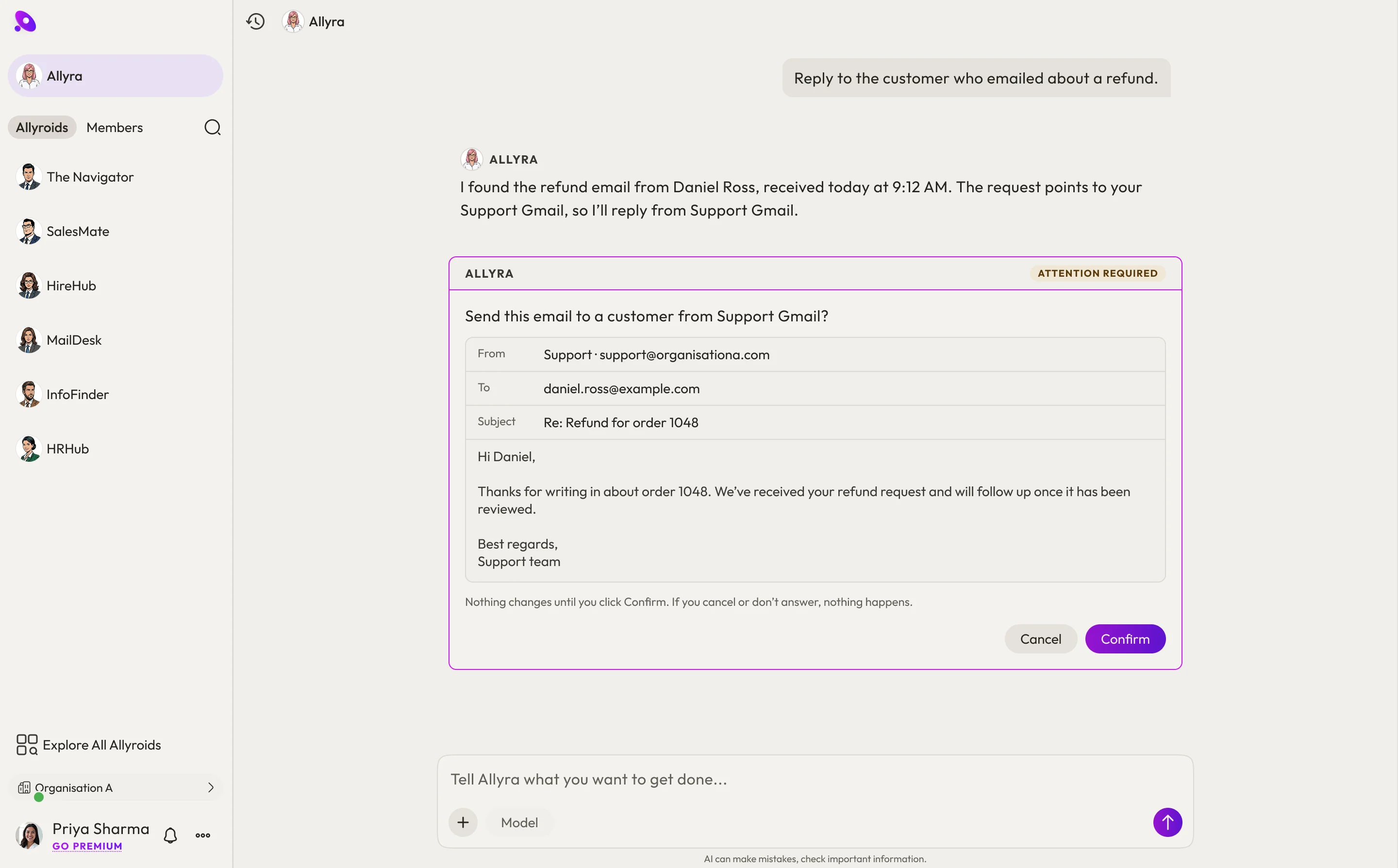
Confirm before a change — nothing is sent until the person confirms; cancelling means nothing happens. 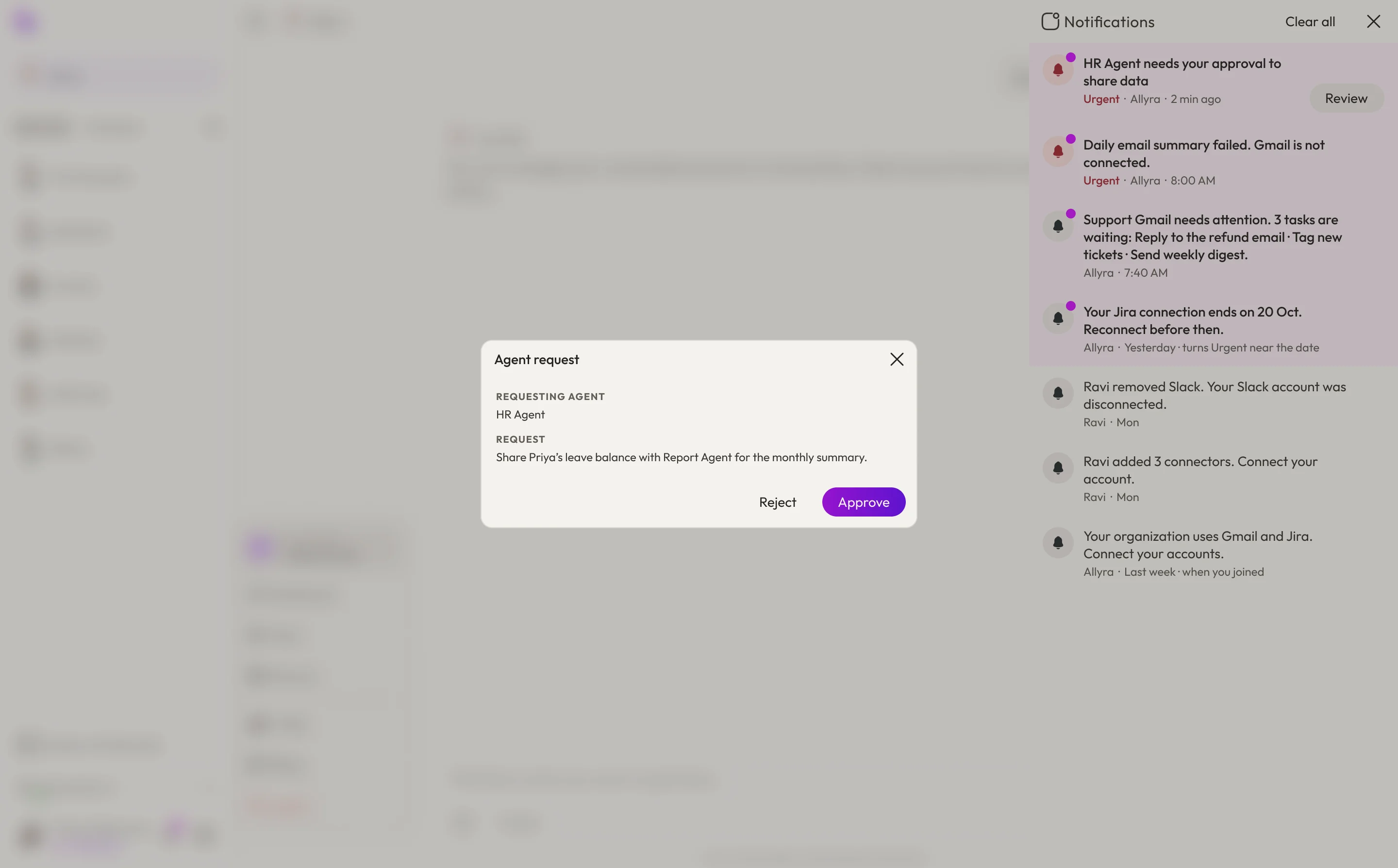
Agent-to-agent requests — when one agent needs another's data, a person approves the hand-off. 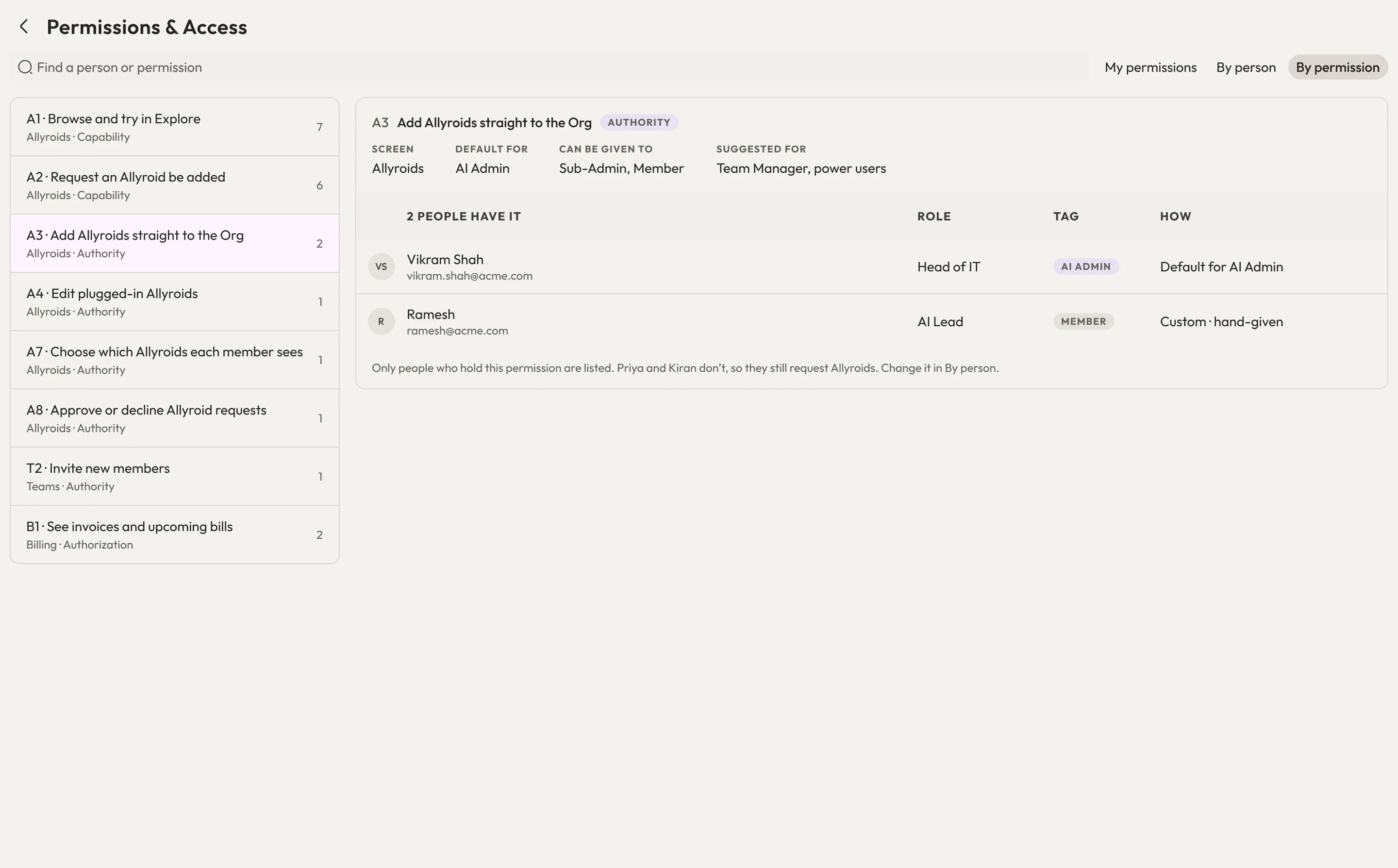
Permissions by capability — admins see exactly who can let agents act, and on what.
Result
What changed
- 5visible stages for every taskScoping, research extraction, synthesis, verification and delivery turn AI from a black box into an inspectable workflow.
- ~50%fewer approval interruptions (est.)Gating only irreversible or sensitive actions focuses human attention where judgment and accountability matter.